Since 2007 I’ve blogged, podcasted and written several books to help those suffering from addictions. It is with this background that the questions around fentanyl began to gnaw at my inner researcher.
According to the CDC, 82% of fentanyl overdose deaths in the U.S. involve Illicitly Manufactured Fentanyl (IMFs) rather than prescriptions. This study explores whether there is any measurable relationship between medical prescriptions and mortality spikes.
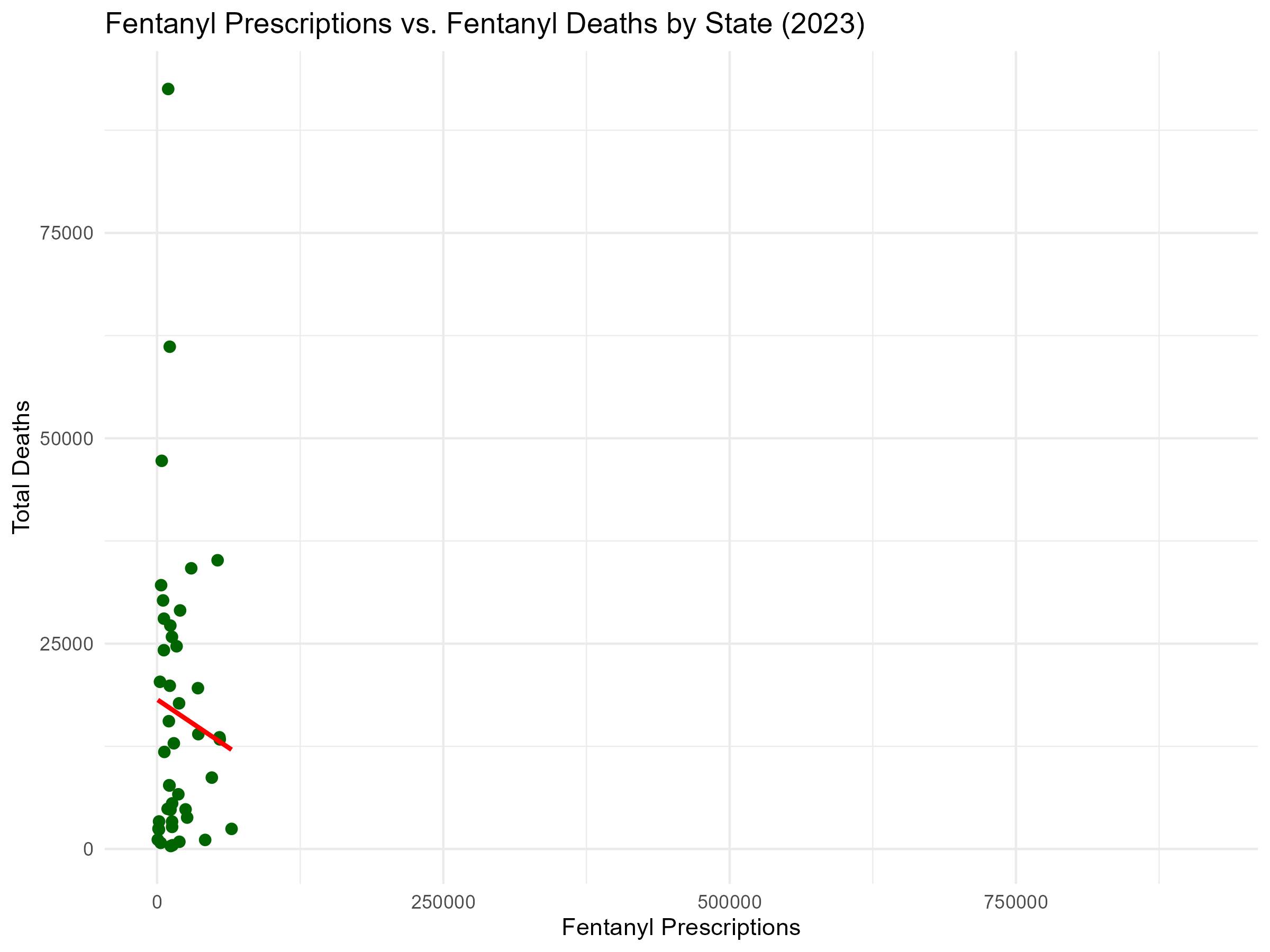
Fentanyl Prescriptions vs. All-Age Deaths (Correlation: -0.1250)
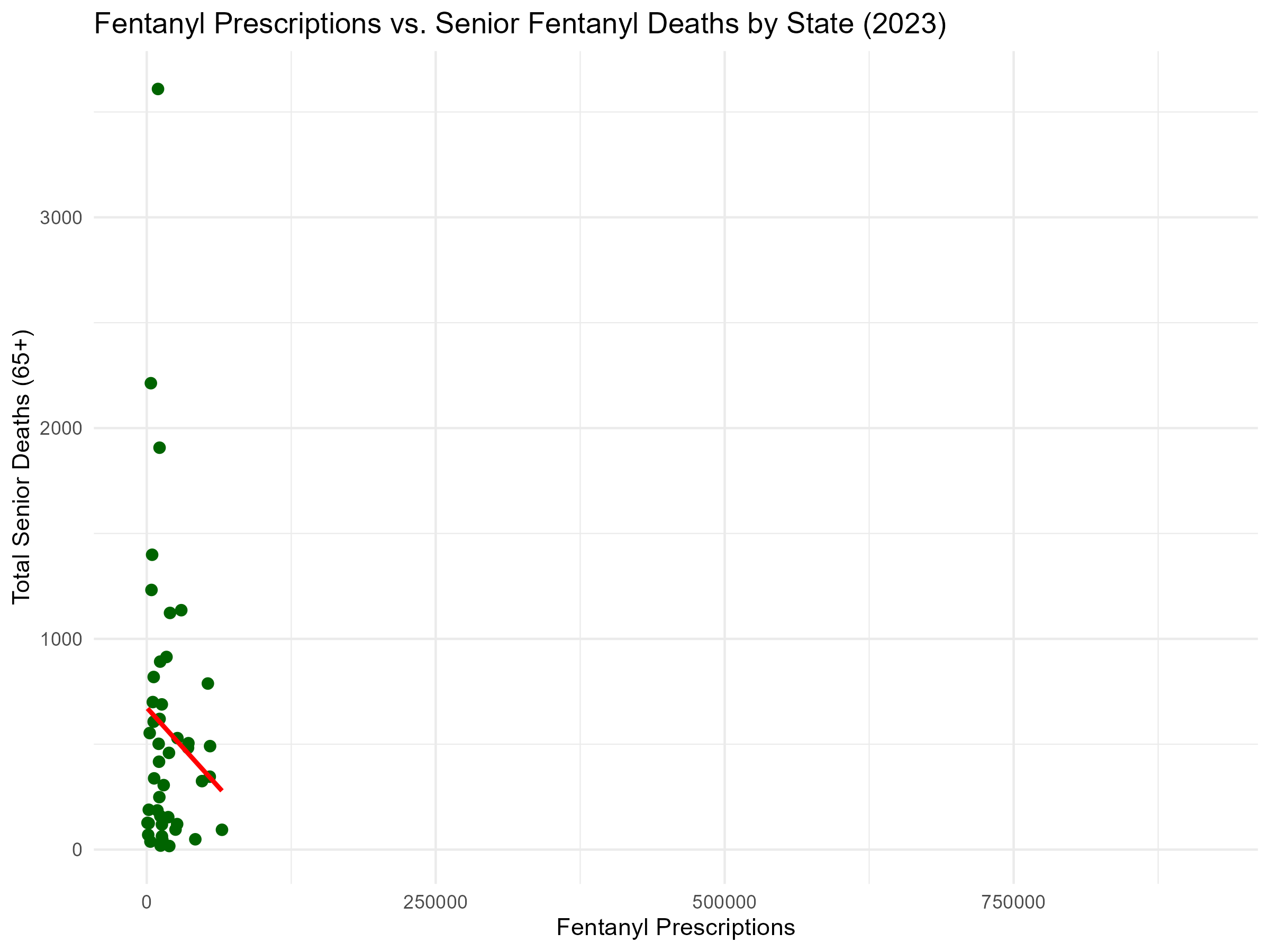
Fentanyl Prescriptions vs. Senior Deaths (65+) (Correlation: -0.1474)
By focusing on a simple, direct question—"Is there a relationship between medical prescriptions and overdose deaths?"—I intentionally chose clarity over technical obscurity. The analysis uses Medicare Part D data (primarily covering seniors 65+) as a baseline for legitimate medical access.
The EDA showed a relationship of zero or slightly negative between prescriptions and deaths nationwide. Specifically, among the Medicare-age population, there is no positive correlation between medical fentanyl prescriptions and overdose rates.
This aligns with the conclusion that the crisis is driven by illicit supply lines, verified by the massive intercept deltas of raw bulk powder in 2024.